Gaffing a fish from a kayak is a different game than gaffing from a boat. You're sitting low, you're close to the water, the kayak moves when you move, and there's nowhere to stash a 6-foot pole. The right kayak gaff is short, light, easy to control one-handed and safe to carry.
Here's what to look for, the right size, and how to use one without flipping or losing the fish.
Quick answer
- Length: 3 ft is the sweet spot for most kayaks. Go 4 ft only if you have the room.
- Hook gap: 2.50"–2.75" for calico bass, halibut, yellowtail, dorado and white seabass.
- Must-haves: a leash, a hook cover, a grippy handle and a gaff that floats.
Why kayak gaffs are different
- You're sitting down, so a long gaff is awkward to swing and hard to bring back in.
- Space is tight. The gaff has to fit along the side, in a crate or in a holder without snagging lines.
- Stability matters. A big lean to reach a fish can put you in the water.
- Things go overboard. A gaff that sinks is a gaff you'll lose.
What to look for in a kayak gaff
Length: 3 ft for most kayaks
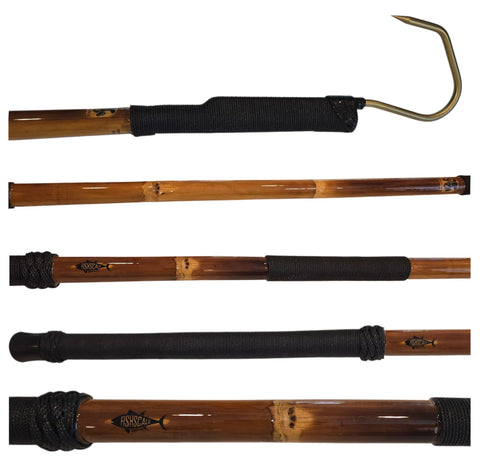
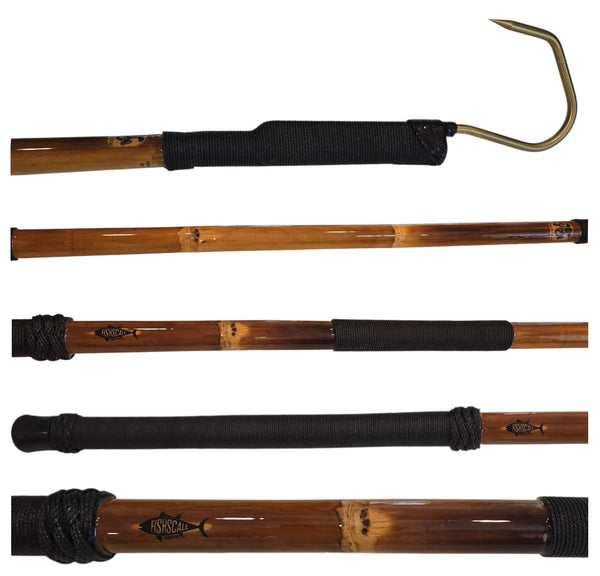
A 3 ft gaff gives enough reach from a seated position while staying easy to handle and stow. A 4 ft gaff works on larger fishing kayaks with more deck space, or if you regularly target bigger fish. For small fish and halibut, some kayak anglers prefer an even shorter pick gaff (24" or 32").
Hook size: 2.50"–2.75" gap
Most kayak fish fall in the range where a 2.50" or 2.75" gap is ideal. A bigger hook is harder to place cleanly on a smaller fish. If you chase tuna from a kayak, step up to a 3.00" gap. Our guide on gaff hooks explains sizes and materials.
It should float
Drop a gaff while you're fighting a fish and you need it to still be on the surface. Calcutta bamboo floats naturally.
A grip you can trust wet
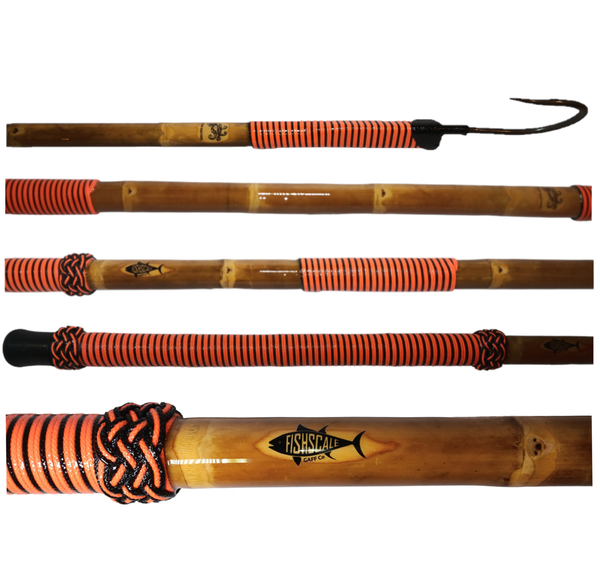
You'll often gaff one-handed with wet, slimy hands. A cord-wrapped handle gives you something to hold onto.
A leash and a hook cover
Attach a short leash to the kayak so the gaff can't drift off, and keep the point covered when it's not in use. An uncovered gaff hook in a kayak is a good way to puncture a seat, a dry bag or a leg.
Our pick for kayak anglers
A 3 ft Calcutta bamboo gaff with a 2.50" or 2.75" gap Mustad hook ($149.99 to start) covers most kayak fishing. Light/medium action works well for kayak-size fish. Want it in your kayak's colors? Use the Custom Gaff Builder.
How to gaff a fish from a kayak
- Tire the fish out first. A green fish next to a kayak is trouble. Wait until it's ready.
- Bring the fish alongside, not in front. Keep it at your side where you're most stable.
- Keep your weight centered. Reach with your arm, not your body.
- Gaff the head or shoulder, not the belly or tail, and lift in one smooth motion.
- Bring it straight into the kayak and onto your lap, a deck pad or into a fish bag.
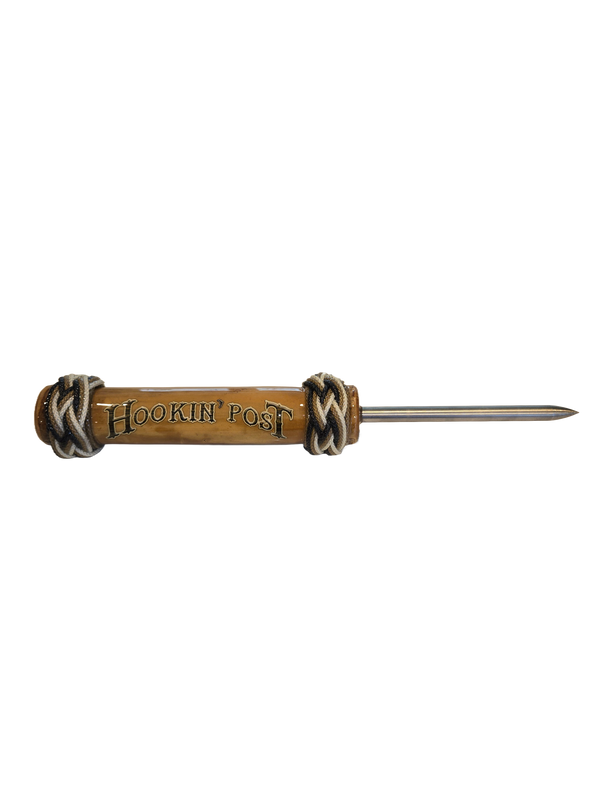
- Dispatch it quickly. A tuna spike or fish priest stops it from thrashing in a small space.
- Cover the hook and stow the gaff before you do anything else.
Storing a gaff on a kayak
- Along the side in a flush-mount rod holder or a dedicated gaff holder
- In your crate, point down and covered
- Bungeed under deck lines, with a leash attached
Whatever you choose, make sure you can grab it with one hand without looking.
FAQ
What size gaff do I need for a kayak?
A 3 ft gaff with a 2.50"–2.75" hook gap works for most kayak fishing.
Do I need a gaff on a kayak?
For fish you plan to keep that are too big to lip or lift by the leader, like yellowtail, halibut and white seabass, a gaff makes landing them much safer. For catch-and-release, use a net or lip grip instead.
What's the best gaff hook for a kayak?
A 2.50" or 2.75" gap for most fish. Stainless or titanium hooks need the least care.
Will a bamboo gaff float?
Yes. Calcutta bamboo floats if it goes overboard.